Retinoids
The retinoid story starts with tretinoin, the prescription form of retinoic acid that Albert Kligman developed as an acne treatment in the late 1960s and that later showed effects on photoaged skin. Tretinoin acts directly on retinoic acid receptors. Cosmetic retinoids do not; they must be converted inside the skin, and each conversion step costs potency.
Retinyl palmitate is an ester that must become retinol, then retinaldehyde, then retinoic acid: the weakest route. Retinol skips one step. Retinal (retinaldehyde) is one step from the active form and is generally considered stronger than retinol at the same percentage. Adapalene, a synthetic retinoid, became available over the counter in the United States at 0.1% after an FDA decision in 2016.
In the EU, a 2024 amendment to the Cosmetics Regulation, following an opinion from the Scientific Committee on Consumer Safety, limits retinol and its esters to 0.3% retinol equivalent in face and hand products and 0.05% in body lotions. So a European retinol labelled “1%” deserves a second look at what exactly is being counted.
The workhorse
Start at 0.1–0.3% two or three nights a week. Expect dryness for a few weeks.
One step closer
Often effective at 0.05–0.1%. Unstable; packaging matters as much as dose.
The gentle garnish
Mild and stable, with modest evidence. Common in products that want the word “retinol” nearby.
Alpha and beta hydroxy acids
Hydroxy acids loosen the bonds between dead cells at the surface. Glycolic acid is the smallest alpha hydroxy acid and penetrates fastest; lactic acid is larger, a little gentler, and adds some humectancy. Mandelic acid is larger still.
The number that matters is not only percentage but pH. An acid works when a meaningful share of it is in its free, unneutralised form, and that depends on the pH of the formula relative to the acid's pKa (about 3.8 for glycolic). The U.S. FDA's guidance for consumer AHA products, based on Cosmetic Ingredient Review findings, points to concentrations of 10% or less at a final pH of 3.5 or higher, with sun protection advice on the label, because AHAs increase sensitivity to UV.
“A 10% glycolic toner at pH 4.5 can be gentler than a 5% one at pH 3.2. Ask for the pH, not just the percentage.”
Salicylic acid, the common beta hydroxy acid, is oil-soluble and works inside pores, which is why it is the acne-leaning choice. The U.S. over-the-counter acne monograph allows 0.5–2%. In the EU it is restricted to 2% in most leave-on and rinse-off face products, with exceptions and lower limits for some categories.
Vitamin C
Only ascorbic acid (L-ascorbic acid) has a large body of skin research behind it. Work associated with Sheldon Pinnell at Duke University found that it penetrates best at a pH below about 3.5 and that effects plateau around 20%. A widely cited formula combined 15% ascorbic acid with vitamin E and ferulic acid to improve stability and photoprotection.
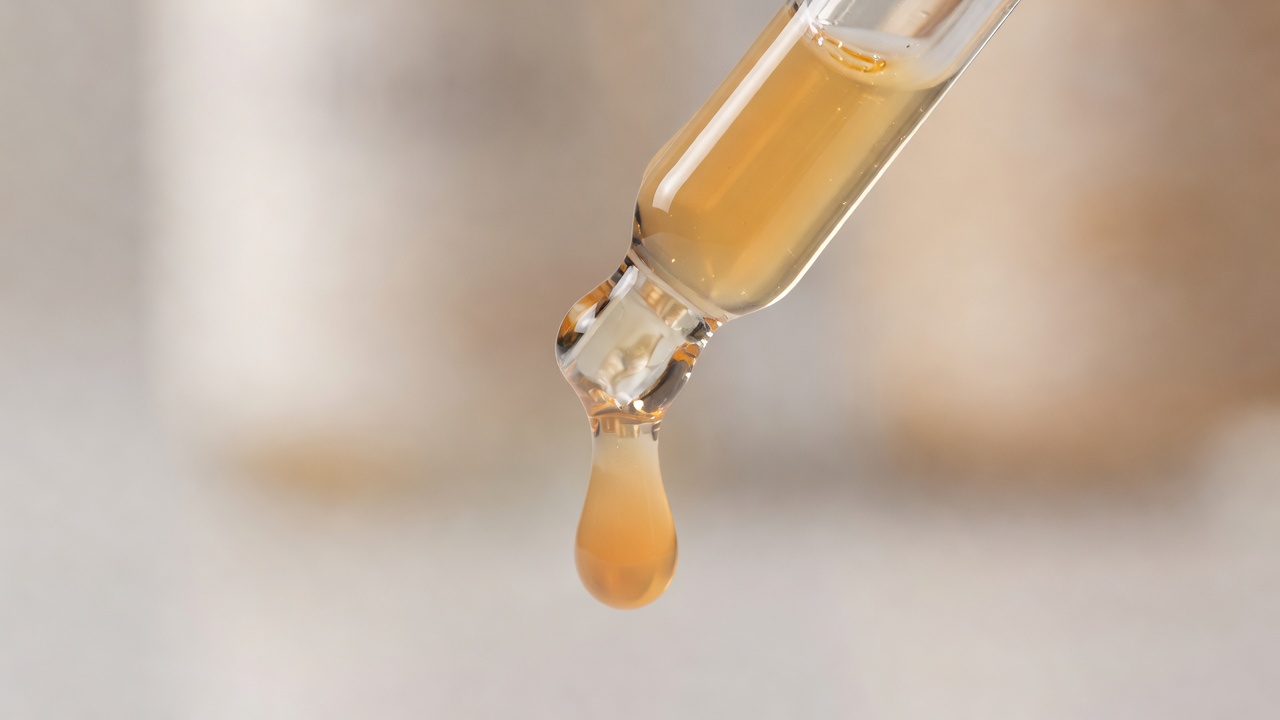
The trouble is oxidation: a serum that has turned dark orange has partly become dehydroascorbic acid and beyond. Derivatives such as sodium ascorbyl phosphate, ascorbyl glucoside and tetrahexyldecyl ascorbate are more stable but must be converted in skin, and their human data are thinner. A label that says “vitamin C” without naming the form has told you very little.
Niacinamide and azelaic acid
Niacinamide is stable, well tolerated and supported by controlled studies at 2–5% for redness, uneven tone and barrier function. Azelaic acid, prescribed at 15–20% for rosacea and acne, appears in cosmetics at lower strengths, often as a derivative called potassium azeloyl diglycinate. Both are good examples of quiet actives that rarely need dramatic marketing.
Peptides
Peptides are short chains of amino acids, and they are where label language and evidence drift furthest apart. Palmitoyl pentapeptide-4 (sold as Matrixyl) has some supporting studies, mostly small and often sponsored by the supplier. Copper tripeptide-1, the GHK-Cu complex first described by Loren Pickart in 1973, has interesting wound-healing research behind it. Acetyl hexapeptide-8 is marketed as topical “Botox”; the comparison is not supported by evidence of anything close to the effect of an injection.
Peptides are usually used at fractions of a percent, so the honest test is the same as for everything else: is it named, is it high enough on the list to matter, and is the claim tied to a study you can actually find?
The constant: sunscreen
Every active above either increases UV sensitivity or is undone by UV damage. Daily broad-spectrum sunscreen is the one product whose evidence outranks everything in this guide. Next, see how the same claims play out across real formulas in Same Claim, Different Bottle.